Latest Products


Contact Us
- Xingshi West Road, Wenfeng Subdistrict, Laizhou City, Shandong, P. R. China
- sales@lztonghesheng.com
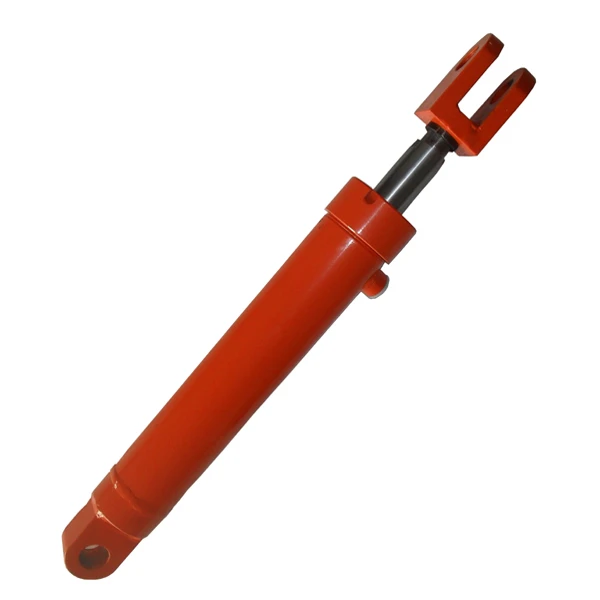
Heavy-Duty Hydraulic Cylinders For Construction Equipment
These heavy-duty hydraulic cylinders are double-acting, welded linear actuators engineered specifically for high-load construction machinery including excavators, wheel loaders, backhoes, bulldozers, and drill rigs. Built to withstand continuous shock loads, abrasive environments, and peak operating pressures up to 35 MPa (5,076 PSI), they provide reliable power transmission for boom, arm, bucket, steering, and outrigger functions.
Description
Tonghesheng Machinery is one of the competitive manufacturers and suppliers of high-quality heavy-duty hydraulic cylinders for construction equipment, and we are also equipped with a professional factory, welcome to buy heavy-duty hydraulic cylinders for construction equipment products from our company.
These heavy-duty hydraulic cylinders are double-acting, welded linear actuators engineered specifically for high-load construction machinery including excavators, wheel loaders, backhoes, bulldozers, and drill rigs. Built to withstand continuous shock loads, abrasive environments, and peak operating pressures up to 35 MPa (5,076 PSI), they provide reliable power transmission for boom, arm, bucket, steering, and outrigger functions.
All cylinders are manufactured using heavy-wall seamless steel tubing, induction-hardened chrome rods, and heavy-duty polyurethane/PTFE seal packages to eliminate internal bypass and external fluid leakage under severe duty cycles.
Key Specifications
|
Parameter |
Standard Capability / Specification Range |
|
Bore Size Range |
40 mm – 320 mm (1.57 in – 12.60 in) |
|
Piston Rod Diameter |
25 mm – 220 mm (0.98 in – 8.66 in) |
|
Maximum Stroke Length |
Up to 6,000 mm (236.22 in) |
|
Working Pressure |
Rated: 16 MPa to 31.5 MPa (2,320 – 4,568 PSI) Peak: 35 MPa (5,076 PSI) |
|
Operating Temperature |
Standard: -20°C to +80°C (-4°F to +176°F) Low-Temp / High-Temp Seals: -40°C to +120°C |
|
Cylinder Barrel Material |
ST52-3 / E355 / 27SiMn seamless honed tube, inner wall roughness Ra ≤ 0.4 µm |
|
Piston Rod Material |
45# / 42CrMo steel, induction hardened (HRC 50–55), chrome plating thickness 30–50 µm |
|
Mounting Types |
Spherical plain bearings, steel clevis, trunnion, cross-tube, or flange mounts |
|
Fluid Compatibility |
Mineral-based hydraulic oils (HLP, HVLP), biodegradable synthetic esters |
|
Cushioning |
Optional progressive mechanical cushions on head end, cap end, or both |
Key Product Features
High Yield-Strength Barrel Construction: Honed 27SiMn / E355 steel tubing resists swelling under pressure spikes, maintaining precise piston seal tolerances and preventing internal fluid bypass.
Induction-Hardened Chrome Rods: Chrome plating (minimum 30 µm) combined with induction hardening yields a corrosion-resistant surface that rejects rock chips, sand abrasion, and impact denting.
Multi-Stage Sealing System:
- Primary U-cup polyurethane rod seal with anti-extrusion ring handles high-pressure holding.
- Secondary buffer seal mitigates pressure spikes.
- Double-lip skeleton wiper prevents mud, dust, and moisture ingress.
Friction-Welded / Full-Penetration Welded Ends: Ultrasonic and magnetic-particle tested welds ensure structural integrity between the barrel, end cap, and mounting forgings under multi-directional loading.
Integrated Cushioning Valves: Progressive internal deceleration slows the piston at stroke limits, reducing mechanical noise, frame stress, and structural fatigue.
Load and Operating Condition Considerations
Construction machinery subjects hydraulic cylinders to extreme dynamic forces. Component selection is customized according to operational stresses:
Dynamic Shock Loads: Solved with heavy-wall barrel construction and 42CrMo rods to prevent bending and buckling under sudden load changes.
Abrasive Dust & Mud: Protected by a double-lip skeleton wiper and a hard chrome layer (minimum 30 µm) to prevent seal scoring and fluid contamination.
Side Loading & Torque: Mitigated by self-lubricating spherical bearings and wide bronze guide rings that absorb side forces during uneven digging operations.
Pressure Spikes: Managed through integrated buffer seals and high-yield seamless tubing, preventing barrel expansion and internal pressure loss.
Buckling Resistance: Long-stroke boom and tilt cylinders are evaluated for column strength using Euler's buckling formula based on maximum system relief pressures.
Thermal Range Adaptation: Low-temperature fluorocarbon or nitrile compounds prevent seal hardening in freezing conditions, while Viton options sustain high fluid temperatures during prolonged heavy operation.
Typical Applications
Excavators (1.5 t – 50 t): Boom, arm, and bucket cylinders capable of handling rapid cycle rates and continuous impact loads.
Wheel Loaders & Backhoes: Lift, tilt, and articulated steering cylinders requiring high holding force and side-load tolerance.
Bulldozers & Graders: Blade lift, angle, and ripper cylinders exposed to direct ground impact and high dirt contamination.
Drilling Rigs & Cranes: High-pressure feed and outrigger cylinders where zero drift under static load is mandatory for operator safety.
Compactors & Dump Trucks: Heavy-duty steering and hoist cylinders built for continuous outdoor exposure and heavy vibration.
Configuration Options
Customized configurations adapt to specific OEM envelope dimensions and hydraulic circuit demands:
Hydraulic Ports: SAE flange ports (3000/6000 PSI series), BSPP, or NPT thread connections; custom oil tube routing directly welded to the barrel.
Position Sensing: Internal magnetostrictive or linear inductive sensors (IP67/IP69K) for automated machine guidance and telemetry.
Valving Integration: Directly mounted dual counter-balance valves, pilot-operated check valves, or pressure-relief manifolds to eliminate external hydraulic hoses.
Rod Surface Coatings: Nickel-chrome plating or laser cladding available for high-corrosion environments such as marine or salt-road exposure.
Pin Bushings: Hardened steel bushings, self-lubricating bronze composite sleeves, or maintenance-free spherical bearings.
Manufacturing Process
The manufacturing process follows strict ISO standards to guarantee dimensional accuracy and structural integrity:
Material Procurement & Inspection: Ultrasonic testing on raw seamless tubing and round bars to detect internal voids and micro-cracks.
Deep-Hole Boring & Skiving/Honing: Precision machining of the cylinder barrel inner diameter to achieve Ra ≤ 0.4 µm finish and roundness within 0.02 mm.
Piston Rod Machining & Heat Treatment: CNC turning, high-frequency induction hardening (HRC 50–55 to a depth of 1.5–3 mm), and centerless precision grinding.
Electroplating: Hard chrome plating in automated baths, followed by salt spray testing (NSS up to 96+ hours) to verify corrosion resistance.
Welding: Automated MIG/TIG welding for end caps and port flanges; full-penetration welding on rod eyes.
Cleanroom Assembly: Ultrasonic cleaning of parts prior to assembly in a temperature and dust-controlled environment to prevent seal contamination.
Inspection and Testing
Every manufactured cylinder undergoes 100% factory pressure and functional testing prior to dispatch. Quality control follows a rigid four-step sequence:
Raw Material UT Inspection: Ultrasonic testing to eliminate subsurface flaws before machining.
In-Process Dimensional Control: Continuous coordinate measuring during honing, turning, and grinding.
100% Hydrostatic Test: Tested at 1.5 times the maximum working pressure (up to 50 MPa) to check weld integrity and structural stability.
Zero-Drift Hold Test: Pressure held for 5 minutes at maximum working pressure to confirm seal integrity (permissible internal leakage = 0 ml/min).
Additional Quality Parameters:
Low-Pressure Breakout Test: Verified at minimum pressure (≤ 0.5 MPa) to ensure smooth initial movement without stick-slip motion.
Chrome Layer Quality Check: Thickness gauges confirm 30–50 µm plating; surface finish tested to Ra ≤ 0.2 µm.
Fluid Cleanliness Control: Internal oil flushed to meet ISO 4406 cleanliness standard 18/16/13 before port sealing.
What Buyers Should Provide for a Quotation
To receive an accurate engineering quotation within 24–48 hours, please provide the following technical details:
Cylinder Dimensions: Bore size, Rod diameter, and Stroke length
Mounting Distance: Closed length (pin-to-pin) and extended length
Working Parameters: Operating pressure (rated and peak) and cycle speed
Mounting Interface: Pin diameter, eye width, and spherical bearing requirements
Port Details: Port type, thread size, and orientation relative to mounting pins
Operating Environment: Ambient temperature, dust/salt exposure, and shock load severity
Volume Requirements: Prototype quantity and expected annual production volumes
FAQ
Q: What is the typical lead time for custom prototype cylinders versus batch production?
A: Prototype samples with custom mounting dimensions typically ship within 3 to 4 weeks. Standard batch production runs require 4 to 6 weeks depending on raw material availability and total order volume.
Q: Can you manufacture replacement cylinders based on broken samples or technical drawings?
A: Yes. Dimensions can be reverse-engineered from physical samples, or produced directly from existing OEM 2D drawings and CAD models, ensuring 100% drop-in replacement compatibility.
Q: How do you prevent rod seal failure caused by heavy external contamination in excavators?
A: A double-lip skeleton wiper is integrated into the gland design, combined with an induction-hardened rod surface (HRC 50–55) that resists scoring from debris before it can damage the primary seal lips.
Q: What surface finish and corrosion protection standards do you apply to piston rods?
A: Piston rods receive hard chrome plating with a minimum thickness of 30 µm, polished to a surface finish of Ra ≤ 0.2 µm. Standard rod finishes pass a 96-hour Neutral Salt Spray (NSS) test per ISO 9227, with higher salt-spray ratings available upon request.
Q: What paint finishes are applied for heavy machinery exposure?
A: Cylinders undergo abrasive shot blasting to SA 2.5 cleanliness, followed by a high-solid epoxy primer and a polyurethane topcoat (total DFT 80–120 µm) to withstand UV, hydraulic oil spills, and physical abrasion.
Hot Tags: heavy-duty hydraulic cylinders for construction equipment China, manufacturers, suppliers, factory, company, high-quality, buy, products
You Might Also Like