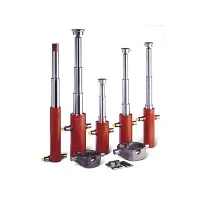
Latest Products
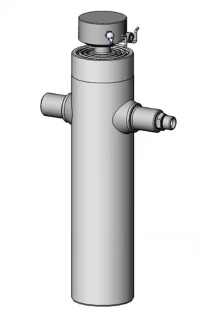
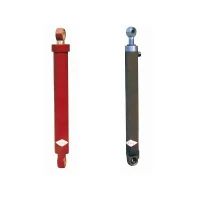


Contact Us
- Xingshi West Road, Wenfeng Subdistrict, Laizhou City, Shandong, P. R. China
- sales@lztonghesheng.com

Material Handling Hydraulic Cylinders
Material handling equipment demands hydraulic actuators capable of enduring continuous duty cycles, shock loading, and harsh ambient environments. These hydraulic cylinders operate at working pressures up to 35 MPa (5,076 PSI) with bore sizes ranging from 40 mm to 320 mm and stroke lengths up to 6,000 mm.
Description
Tonghesheng Machinery is one of the competitive manufacturers and suppliers of high-quality material handling hydraulic cylinders, and we are also equipped with a professional factory, welcome to buy material handling hydraulic cylinders products from our company.
Material handling equipment demands hydraulic actuators capable of enduring continuous duty cycles, shock loading, and harsh ambient environments. These hydraulic cylinders operate at working pressures up to 35 MPa (5,076 PSI) with bore sizes ranging from 40 mm to 320 mm and stroke lengths up to 6,000 mm.
Engineered for forklifts, reach stackers, automated guided vehicles (AGVs), aerial work platforms, container handlers, and telehandlers, these single-acting, double-acting, and multi-stage telescopic cylinders deliver precise positioning and mechanical safety. They incorporate integrated load-holding safety valves, frictionless polyurethane/PTFE sealing systems, and hardened, induction-plated piston rods designed to withstand off-axis bending moments during dynamic load shifting.
Key Specifications
|
Parameter |
Standard Range / Technical Specification |
Custom Option Availability |
|
Bore Size |
40 mm – 320 mm (1.57" – 12.60") |
Up to 500 mm |
|
Rod Diameter |
25 mm – 220 mm (0.98" – 8.66") |
Customized step-down / hollow rods |
|
Stroke Length |
Up to 6,000 mm (236.22") |
Up to 10,000 mm for telescopic models |
|
Working Pressure |
16 MPa – 35 MPa (2,320 PSI – 5,076 PSI) |
High-pressure designs up to 45 MPa |
|
Operating Temperature |
-20°C to +80°C (-4°F to +176°F) |
Low-temp (-45°C) / High-temp (+200°C) |
|
Piston Rod Material |
45# Steel, 42CrMo4, 20MnV6 |
17-4PH Stainless Steel, Nitrided Steel |
|
Barrel Material |
ST52-3, E355, 27SiMn seamless honed tube |
Heavy-wall seamless alloy tubing |
|
Surface Treatment |
Hard chrome plating (25–50 µm thickness) |
Nickel-Chrome plating, QPQ Nitriding |
|
Corrosion Resistance |
ISO 9227 NSS 96 Hours (Grade 9/10) |
CASS 96–500 Hours / Salt spray > 1,000 Hours |
|
Seal Kits |
Hallite, NOK, Parker, SKF PTFE/PU Seals |
Viton (FKM), Low-friction PTFE step-seals |
|
Mounting Types |
Clevis, Flange, Spherical Bearing, Trunnion |
Custom integrated mounting lugs |
|
Integrated Components |
Counterbalance valves, pilot check valves, position sensors |
Linear transducers (MTS/Balluff), proximity switches |
Key Product Features
Rigid Honed Barrel Construction
Seamless cold-drawn tubes (ST52.3 / E355) are precision-honed to an internal surface roughness of Ra <= 0.2 µm. This minimizes seal wear, eliminates internal fluid bypass across the piston, and lowers break-away friction under high startup pressure.
Induction-Hardened, Plated Piston Rods
Piston rods undergo high-frequency induction hardening to a depth of 1.5–3.0 mm (surface hardness HRC 52–60) prior to micro-crack hard chrome plating. This treatment protects the rod core against impact damage and localized denting while resisting side-load abrasion in outdoor environments.
Friction-Optimized Multi-Lip Sealing System
High-pressure polyurethane U-cups, PTFE step seals with NBR energizers, and phenolic wear bands prevent metal-to-metal contact between the rod, piston, and barrel. The guidance rings absorb radial loads and reduce stick-slip motion during low-speed lifting operations.
End-Position Cushioning Mechanisms
Adjustable or fixed tapered cushioning at both stroke limits reduces deceleration force and peak pressure spikes. This mechanism protects mast structures, boom pins, and internal cylinder heads from impact fatigue during rapid lowering or extending maneuvers.
Lifting Mechanism Design Considerations
Buckling Resistance Under Dynamic Loads
Long-stroke cylinders used in material handling masts and telehandler booms are prone to Euler column failure under high axial compression. Rod diameter selection must account for maximum extended length, stroke-to-bore ratio, and column end-fixity factors. Calculate critical buckling force using Euler's formula:
P_cr = (PI^2 * E * I) / (K * L)^2
Where: P_cr = Critical Buckling Load (N) E = Young's Modulus of Elasticity (N/mm^2) I = Area Moment of Inertia of the Rod (mm^4) L = Unguided Extended Length (mm) K = Column Length Factor based on end-mounting fixity
Column End-Fixity Types & Effective Length Factors (K): Fixed - Free (K = 2.0): One end fixed, one end unguided and free to move. Represents the highest buckling risk. Pin - Pin (K = 1.0): Pinned at both ends (Standard Clevis mount). Standard reference baseline for industrial cylinders. Fixed - Pin (K = 0.7): One end rigidly fixed, one end pinned. Provides moderate column rigidity. Fixed - Fixed (K = 0.5): Rigidly fixed at both ends. Delivers the highest structural rigidity and lowest effective length.
Side Load Management & Wear Band Distribution
Uneven weight distribution on forks or extended booms introduces bending moments to the cylinder rod. To prevent scoring and premature seal failure, wider composite guide rings are placed at extended center-to-center distances inside the gland nut and on the piston head.
Internal Support Configuration: Head Gland Wear Ring: Positioned near the rod seal to absorb initial side-loading force at full extension. Piston Wear Rings: Dual-ring layout straddling the main piston seal to maintain axial alignment and prevent tube-wall contact. Extended Bearing Span (L): Maximize the distance between the gland guide ring and piston wear ring when fully extended to reduce localized bearing stress.
Thermal Expansion and Contraction Factors
Continuous duty cycles generate heat in hydraulic fluids (+60°C to +80°C), causing fluid expansion and reduced viscosity. Conversely, operation in cold-storage warehouses (-30°C) leads to seal contraction and material embrittlement. Material handling cylinders employ elastomeric energized seals with wide temperature windows and structural clearances that accommodate thermal dimensional shifts.
Typical Applications
Forklift Trucks (Mast Lift, Tilt, and Side-Shift)
Lift Cylinders: Single-acting or displacement cylinders requiring zero-drift valve integration to maintain overhead load stability over long hold times.
Tilt Cylinders: Double-acting cylinders with spherical bearings that handle combined axial thrust and off-center torsional forces during forward and backward mast tilting.
Reach Stackers & Heavy Container Handlers
Main Boom Lift Cylinders: Large-bore (> 200 mm) double-acting units built to withstand transient pressure spikes exceeding 40 MPa when stopping dynamic loads at high extensions.
Steering Cylinders: Equal-displacement double-rod cylinders providing symmetrical response across heavy axle assemblies.
Aerial Work Platforms & Telehandlers
Multi-Stage Telescopic Cylinders: Internal fluid passages eliminate external hosing, providing smooth, multi-stage telescopic boom extension while protecting lines from environmental snagging.
Automated Guided Vehicles (AGVs) & AMRs
Low-Profile Deck Lift Cylinders: High power-density units with integrated magnetic switches or absolute encoders, engineered for compact spaces in automated warehouse vehicles.
Customization Options
Customization Possibilities:
Mountings: Clevis, Cross-Tube, Trunnion, Spherical Bushings, Square Flanges, Custom Cast Feet.
Fluid Ports: SAE Flange (Code 61/62), BSPP, NPT, Metric Thread, Manifold Mount, Quick-Disconnect.
Rod Coatings: Double Chrome Plating, Nickel-Chrome, QPQ Nitriding, Ceramic Coating.
Valve Integration: Counterbalance Valves, Pilot-Operated Checks, Flow Restrictors, Pressure Relief.
Customization Options Detail:
Mounting Configuration: Female/male clevis, cross-tube, spherical bushings, mid-trunnion, front/rear square flanges, or custom cast-foot mounts.
Porting Geometry: SAE J518 code 61/62 flange ports, BSPP, NPTF, ISO 6149 metric ports, or direct manifold block mounting faces.
Integrated Valve Blocks: Direct flange-mounted counterbalance valves, hose-burst check valves, and pilot-operated check valves to prevent catastrophic mast dropping upon line rupture.
Position Sensing Technology: Embedded magnetostrictive linear transducers (e.g., MTS Temposonics) or external inductive proximity switches for automated height-limit feedback.
Specialized Coatings: Double-layer chrome, nickel-chrome plating, or salt-bath nitriding (QPQ) for outdoor port cranes or coastal material handling equipment.
Manufacturing Process
Detailed Step-by-Step Manufacturing:
Material Selection & Inspection: Alloy structural steel and seamless honed tubes are checked via spectrographic analysis and ultrasonic flaw detection prior to machining.
Machining & Skiving: Tube interiors are processed using skiving and roller-burnishing machinery to achieve cold-worked surface hardness and low surface roughness (Ra <= 0.2 µm).
Piston Rod Treatment: Rods are precision turned, induction hardened, and centerless ground before entering multi-stage hard chrome plating baths. Post-plating micro-polishing reaches Ra <= 0.1 µm.
Robotic Welding: Ports, end caps, and mounting clevises are attached using automated MIG/MAG submerged arc welding stations, ensuring consistent joint penetration and grain structure.
Cleanroom Assembly: Cylinder components undergo high-pressure washing before final assembly in climate-controlled, dust-filtered cleanroom bays to avoid particulate contamination of internal seals.
Inspection and Testing
Every manufactured cylinder undergoes a mandatory multi-point factory acceptance test (FAT) prior to packaging and dispatch:
100% Factory Acceptance Testing (FAT) Protocol:
Dimensional Verification: CMM check and pin center-to-center measurement.
Hydrostatic Proof Test: 1.5x working pressure with 3-5 minute hold time and zero external leakage.
Zero-Drift Check: Internal seal bypass test with zero drop per minute.
Cleanliness Control: ISO 4406 and gravimetric particle analysis.
Inspection Details:
Hydrostatic Proof Pressure Test: Tested at 1.5 times working pressure (up to 52.5 MPa) to confirm structural integrity and weld seam soundness.
Internal Leakage (Bypass) Test: High-pressure oil is applied to one side of the piston while holding position for 3 to 5 minutes. Fluid bypass is measured at zero drops per minute.
Break-away & Low-Pressure Glide Test: Verifies low-pressure operation (< 0.5 MPa) across the entire stroke to ensure concentricity, smooth extension, and freedom from mechanical binding.
Fluid Cleanliness Testing: Fluid extracted from tested cylinders undergoes ISO 4406 particle counter analysis, verifying compliance with cleanliness target ISO 16/14/11 or better.
Dimensional & Coating Verification: Coordinate measuring machines (CMM) confirm pin-to-pin center distances. Chrome layer thickness gauges and salt spray chambers confirm corrosion protection limits.
What Buyers Should Provide for a Quotation
To receive an accurate engineering drawing and commercial proposal within 24 hours, supply the following operational parameters:
RFQ Engineering Checklist:
Dimensional Boundaries: Bore size (mm / in) Rod diameter (mm / in) Stroke length (mm / in) Retracted length (pin-to-pin center distance)
Operational Parameters: Maximum working pressure (MPa / PSI) Dynamic tensile / compressive load requirements (kN / lbf) Target stroke speed (mm/s) Operating temperature range (°C / °F)
Duty Cycle & Working Environment: Daily duty cycle hours & actuation frequency Environmental conditions (Indoor, Cold Storage, Marine, Highly Contaminated) Hydraulic fluid type (Mineral-based, Water-Glycol, Synthetic Ester)
Mounting & Connection Details: Rod-end & Base-end mounting styles (Pin diameter, Clevis width) Port configuration (Thread type, Size, Orientation relative to mounts)
Integrated Valve & Sensor Requirements: Counterbalance valves / Check valves required? (Direct flange / Line) Internal position sensor type (Analog 4-20mA, CANopen, IO-Link, Switches)
FAQ
Q: What causes premature internal seal failure in forklift lift cylinders?
A: Premature seal wear typically stems from oil contamination, side-loading caused by off-center fork positioning, or high-temperature fluid degradation. Incorporating wide phenolic guide rings and high-grade polyurethane step-seals prevents metal-to-metal contact and extends seal life.
Q: How do you prevent internal cylinder drift under elevated static loads?
A: Zero-drift performance requires a hard-seal configuration or elastomer-energized PTFE piston seals paired with a direct flange-mounted pilot-operated check valve or counterbalance valve. This isolates fluid within the cylinder chamber and prevents bypass through control valve spools.
Q: What chrome plating thickness is recommended for material handling equipment used in outdoor or port environments?
A: For standard indoor handling (warehouses), 25–30 µm single-layer hard chrome plating passing ISO 9227 NSS 96 hours is sufficient. For outdoor port equipment or marine container handlers, double-layer chrome plating (40–50 µm) or Nickel-Chrome plating achieving ISO 9227 NSS 500+ hours is recommended to prevent pitting corrosion.
Q: Can these hydraulic cylinders be retrofitted into existing OEM machinery?
A: Yes. Cylinders can be reverse-engineered or manufactured to match existing OEM envelope dimensions, pin configurations, port thread types, and load profiles (including replacement units for Cat, Linde, Toyota, Jungheinrich, and Manitou equipment).
Q: What is the typical lead time for custom material handling cylinder orders?
A: Engineering drawings and 3D CAD models are submitted for approval within 48 to 72 hours of receiving RFQ parameters. Sample production typically takes 3 to 4 weeks. Full production runs are delivered within 4 to 6 weeks, depending on raw material alloy requirements and seal availability.
Hot Tags: material handling hydraulic cylinders China, manufacturers, suppliers, factory, company, high-quality, buy, products, Custom Built Heavy Duty Hydraulic Cylinder, Heavy Duty Offshore Hydraulic Cylinder, High Pressure Hydraulic Cylinder for Mining Equipment, High Pressure Hydraulic Cylinder for Test Equipment, High Pressure Hydraulic Press Cylinder, Welded Hydraulic Cylinder for Agricultural Equipment
You Might Also Like