Latest Products


Contact Us
- Xingshi West Road, Wenfeng Subdistrict, Laizhou City, Shandong, P. R. China
- sales@lztonghesheng.com
Telescopic Dump Truck Hydraulic Cylinders
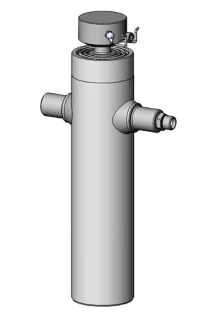
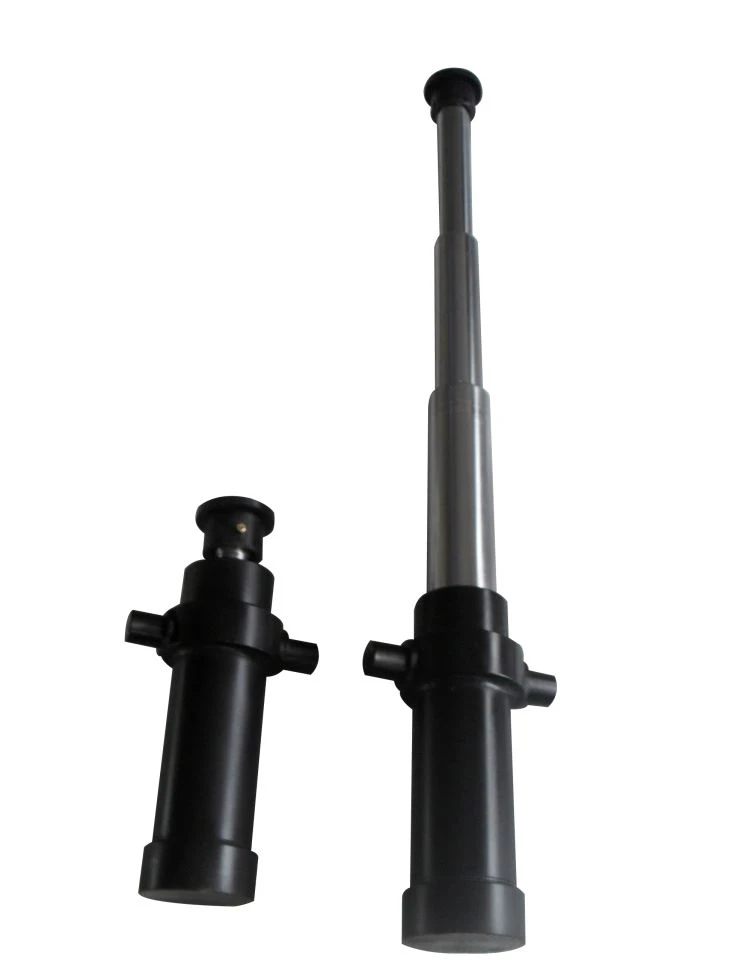
Multi-stage telescopic hydraulic cylinders optimize stroke length while maintaining a compact retracted dimension, making them the industry standard for front-end and underbody dump trucks, trailers, and tipping equipment. By utilizing nested tubular stages (plungers) that extend sequentially from largest to smallest diameter, these single-acting cylinders deliver maximum lifting force during initial tipping while requiring minimal mounting space.
Description
Tonghesheng Machinery is one of the competitive manufacturers and suppliers of high-quality telescopic dump truck hydraulic cylinders, and we are also equipped with a professional factory, welcome to buy telescopic dump truck hydraulic cylinders products from our company.
Multi-stage telescopic hydraulic cylinders optimize stroke length while maintaining a compact retracted dimension, making them the industry standard for front-end and underbody dump trucks, trailers, and tipping equipment. By utilizing nested tubular stages (plungers) that extend sequentially from largest to smallest diameter, these single-acting cylinders deliver maximum lifting force during initial tipping while requiring minimal mounting space.
Key structural components:
Outer Barrel (Base Tube): Heavy-wall seamless steel tubing engineered for high structural stability against side loading during high-angle dumping.
Telescopic Stages (Plungers): Precision-honed, thick-walled steel tubes coated with hard chrome or plasma nitride for corrosion resistance and abrasion durability.
Sealing Package: High-performance polyurethane U-cups, low-friction PTFE step seals, anti-extrusion bronze-filled back-up rings, and aggressive wiper seals to isolate contaminants in dusty job-site conditions.
Stop Rings / Internal Stops: Machined steel retention rings that maintain mechanical limits at full extension and prevent stage over-travel.
Key Specifications
|
Parameter |
Standard Range / Technical Specification |
|
Number of Stages |
2 to 6 stages |
|
Bore Size Range |
75 mm to 280 mm (3 inches to 11 inches) |
|
Stroke Length |
Up to 10,000 mm (393 inches) |
|
Working Pressure |
Nominal: 16 MPa to 22 MPa (160 to 220 bar / 2300 to 3200 psi) |
|
Peak Operating Pressure |
Up to 25 MPa (250 bar / 3625 psi) |
|
Mounting Types |
Pin-Pin, Trunnion Top/Bottom, Cover Plate, Spherical Eye |
|
Operating Temperature |
Standard: -20 degrees C to +80 degrees C (-4 degrees F to +176 degrees F) Low-Temp / High-Temp options: -40 degrees C to +120 degrees C |
|
Fluid Compatibility |
Mineral hydraulic oil (ISO VG 32, 46, 68), synthetic / fire-resistant fluids on request |
|
Chrome Plating Thickness |
25 micrometers to 40 micrometers per stage (Hard Chrome) |
|
Surface Finish |
Internal tube finish: Ra 0.2 to 0.4 micrometers; Plunger outer finish: Ra 0.1 to 0.2 micrometers |
Key Product Features
Optimized Load-to-Stage Force Gradient
Telescopic cylinders naturally lose thrust as smaller stages extend. The cross-sectional area configuration across stages matches the decreasing force requirement of a tipping body as the dump bed angle increases, preventing fluid energy waste and system pressure spikes.
Heavy-Duty Contamination Barrier
A multi-lip sealing arrangement paired with an exterior metallic/polyurethane wiper ring wipes off hardened mud, abrasive dust, and asphalt splatter during stage retraction. This prevents abrasive particle ingress into the hydraulic fluid reservoir.
Structural Side-Load Resistance
Integrated heavy-duty bronze guide bushes support each telescopic stage over extended overlap lengths at full extension. This mechanical design distributes side loads caused by unlevel terrain, wind forces, or unevenly distributed payload during tipping.
Corrosion-Resistant Plunger Surface
Plunger surfaces undergo precision honing followed by hard chrome plating (minimum micro-hardness 850 to 1000 HV0.1). Optional induction hardening before chroming increases impact resistance against debris, preventing deep gouging.
Tipping System Design Considerations
When integrating a telescopic cylinder into a tipper chassis, evaluate the following engineering variables:
Bucket Weight & Payload Center of Gravity (CG):
Determine the maximum total weight (body + material) and the distance from the rear hinge pivot to the payload CG. Initial break-away thrust (1st stage force) must exceed the static tipping moment at 0 degrees tilt.
Maximum Tipping Angle & Geometry:
Required tipping angles range from 42 degrees for free-flowing sand to 55 degrees for sticky clay or scrap metal. Calculate stroke based on rear-hinge-to-mounting-pin mounting geometry.
Oil Displacement Volume:
Telescopic cylinders require larger oil volumes during extension than single-stage rods. Verify hydraulic tank usable volume to prevent pump cavitation at full cylinder extension.
Buckling & Lateral Stability:
Assess lateral forces caused by uneven ground during tipping. Ensure the cylinder mount allows axial articulation (such as spherical bearings or trunnions with adequate clearance) to avoid bending forces on extended stages.
Typical Applications
On-Highway Dump Trucks & Tippers: Front-mounted cylinders for rigid frame 3-axle and 4-axle construction vehicles.
Tipping Semi-Trailers: Multi-stage high-stroke cylinders (5-stage to 6-stage) mounted on aluminum or steel bulk material trailers.
Side-Dump & Agricultural Trailers: Compact multi-stage cylinders fitted under trailer chassis for multi-directional discharge.
Mining & Heavy Duty Off-Road Tippers: Heavy-walled custom telescopic cylinders designed for high-tonnage earthmoving applications.
Waste Management Vehicles: Refuse roll-off hoist systems and hook-lift equipment requiring high axial extension within compact envelope constraints.
Customization Options
We engineer telescopic cylinders according to direct OEM specs or field replacements:
Mounting Interfaces: Custom eyelet diameters, spherical bearings, trunnion locations, or flange designs matching specific truck body cross-members.
Fluid Porting: Threaded NPT, SAE O-ring boss, or BSPP ports; integrated hydraulic check valves, velocity fuses, or slow-return throttle valves directly on the cylinder inlet.
Stage Surface Treatments: Single/double hard chrome plating, QPQ nitriding, or nickel-chrome plating for salt spray resistance exceeding 500 hours (ASTM B117).
Seal Selection: Viton/FKM seals for high temperatures; Low-temperature Nitrile (HNBR) for arctic fleet operation down to -40 degrees C.
Integrated Safety Devices: Hose-burst protection valves built into the cylinder base to prevent catastrophic dropping in the event of hydraulic line failure.
Manufacturing Process
[Raw Material Inspection] -> [CNC Tube Turning & Boring] -> [Skiving & Roller Burnishing]
↓
[Precision Assembly] <-- [Grinding & Chrome Plating] <-- [Induction Hardening / Heat Treat]
↓
[Hydrostatic / Dynamic Testing] -> [Shot Blasting & Painting] -> [Packaging & Dispatch]
Seamless Steel Tube Selection: St52.3, E355, or 27SiMn steel tubing inspected for inclusions and wall thickness uniformity.
Skiving and Roller Burnishing: Internal surfaces processed to achieve Ra under 0.4 micrometers roughness and precise dimensional tolerance, ensuring extended seal life.
CNC Machining: Stage stops, lock rings, and mounting threads turned on multi-axis CNC lathes to maintain concentricity and thread integrity.
Heat Treatment & Surface Finish: Plungers induction-hardened, precision-ground, and electro-plated with hard chromium, followed by post-plate polishing to Ra under 0.2 micrometers.
Cleanroom Assembly: Cylinders assembled in clean, controlled environments using specialized hydraulic press tools to eliminate seal damage during fitting.
Inspection and Testing
Every manufactured cylinder undergoes quality verification protocol prior to shipment:
Hydrostatic Proof Pressure Testing: Tested at 1.5 times working pressure (up to 30 MPa) to evaluate structural integrity and weld joint reliability.
Zero-Leakage Internal & External Hold Test: Held under continuous pressure for a minimum of 5 minutes; zero pressure drop and zero bypass permitted.
Stage Sequence & Smoothness Test: Operated through full extension and retraction cycles to verify proper sequential stage movement without stick-slip behavior.
Dimensional & Concentricity Verification: Coordinate Measuring Machine (CMM) and optical gauges check pinhole alignment, trunnion squareness, and overall collapsed length tolerances.
Chromium Layer Inspection: Magnetic thickness testing and salt spray corrosion testing (ASTM B117) conducted on production batch samples.
What Buyers Should Provide for a Quotation
To enable our engineering team to calculate cylinder geometry, structural margins, and cost, provide the following parameters in your inquiry:
Body Payload & Tare Weight: Total tipping weight (Metric tons or Lbs).
Dump Body Dimensions: Body length, distance from rear hinge pivot to front cylinder mounting point.
Required Tipping Angle: Desired maximum tilt angle (for example, 45 degrees or 50 degrees).
Operating Hydraulic Pressure: Available system pressure from PTO / pump (bar or psi).
Dimensional Envelope Constraints:
- Maximum allowable collapsed length (pin-to-pin or trunnion center).
- Target total stroke length.
- Maximum allowable outer diameter of the base tube.
Mounting Style: Top pin size, bottom trunnion dimensions, or eye end specifications.
Operating Environment: Temperature extremes, ambient dust, salt exposure, or specific regional climate conditions.
Annual Volume: Initial sample quantity and estimated annual production demand.
FAQ
Q: What causes sequential stage jumping or uneven extension in telescopic cylinders?
A: Uneven extension occurs when internal friction differences or air entrapment disrupt force balances between stages. Proper bleeding of the hydraulic circuit during installation and choosing high-precision machined internal stop rings eliminates stage hesitation.
Q: How do I choose between front-end pin-mount and underbody trunnion-mount cylinders?
A: Front-end mounted cylinders operate at a larger distance from the body rear pivot, providing a longer lever arm. This reduces the required hydraulic lifting force and fluid volume. Underbody trunnion cylinders suit shorter dump bodies or applications where cab clearance prevents front-end tower installation.
Q: What maintenance prevents fluid leakage around telescopic stage wipers?
A: Regularly inspect stage surfaces for impact gouges or dirt build-up. Maintain clean hydraulic fluid (ISO 4406 clean class 18/16/13 or cleaner) to prevent wear particles from grooving the seal lips. Grease pivot pins and trunnion mountings according to fleet service intervals.
Q: Are replacement seals standard across different cylinder brands?
A: While standard metric O-rings and backup rings follow ISO dimensions, internal multi-stage step seals and guide bands are often engineered to specific stage wall thicknesses. We provide complete replacement seal kits matching our exact assembly drawings or can custom-machine seal grooves to match existing fleet specs.
Hot Tags: telescopic dump truck hydraulic cylinders China, manufacturers, suppliers, factory, company, high-quality, buy, products, Agricultural Sprayer Hydraulic Cylinder, Custom Built Multi Stage Telescopic Cylinder, OEM Double Acting Telescopic Hydraulic Cylinder, Replacement Lifting Equipment Hydraulic Cylinder, Telehandler Hydraulic Cylinder, Telescopic Hydraulic Cylinder for Lifting Equipment
You Might Also Like