Latest Products


Contact Us
- Xingshi West Road, Wenfeng Subdistrict, Laizhou City, Shandong, P. R. China
- sales@lztonghesheng.com
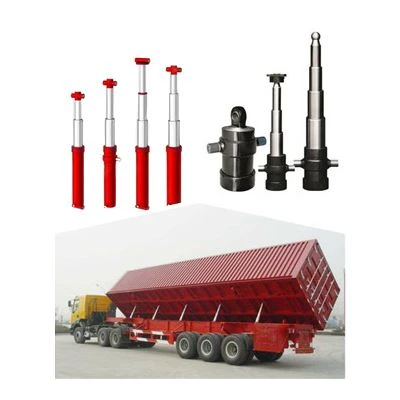
Tipper Trailer Hydraulic Cylinders
Telescopic hydraulic cylinders for tipper trailers provide high extension length within a compact retracted footprint. Built primarily as single-acting units utilizing gravity-assisted body drop, these cylinders deliver efficient payload discharge for rear-tipping and side-tipping trailers, semi-trailers, and heavy aggregate haulers.
Description
Tonghesheng Machinery is one of the competitive manufacturers and suppliers of high-quality tipper trailer hydraulic cylinders, and we are also equipped with a professional factory, welcome to buy tipper trailer hydraulic cylinders products from our company.
Telescopic hydraulic cylinders for tipper trailers provide high extension length within a compact retracted footprint. Built primarily as single-acting units utilizing gravity-assisted body drop, these cylinders deliver efficient payload discharge for rear-tipping and side-tipping trailers, semi-trailers, and heavy aggregate haulers.
By utilizing multi-stage seamless steel tubes processed with precision honing and hard chrome plating, these actuators sustain nominal operating pressures up to 210 bar (3000 PSI) under off-highway conditions, off-center tipping angles, and cyclic heavy loads.
Key Specifications
|
Parameter |
Standard Range / Specification |
|
Number of Stages |
2 to 5 Stages |
|
Bore Diameter Range |
75 mm to 250 mm (3 inches to 10 inches) |
|
Stroke Range |
Up to 10,000 mm (Custom lengths available) |
|
Operating Pressure |
Nominal: 160 to 210 bar (2300 to 3000 PSI) / Max Peak: 250 bar |
|
Fluid Compatibility |
Standard Mineral Hydraulic Oils (ISO VG 32 / 46 / 68) |
|
Temperature Range |
Standard: -20 degrees C to +80 degrees C (-4 degrees F to 176 degrees F) / Low-temp seals available up to -45 degrees C |
|
Tube Material |
27SiMn / St52 / E355 High-Tensile Seamless Alloy Steel Tubing |
|
Surface Finish (ID/OD) |
ID Honed Ra less than or equal to 0.4 microns; OD Chrome Plated Ra less than or equal to 0.2 microns |
|
Plating Layer Thickness |
25 microns to 45 microns Hard Chrome Plating per stage |
|
Mounting Types |
Top Eye / Bottom Trunnion, Pin-Eye, Spherical Ball Mounts |
|
Sealing System |
High-pressure Polyurethane (PU), PTFE Chevron packing, NBR wiper seals |
Key Product Features
Stage Stop Design: Precision-machined internal retaining rings stop each stage automatically without mechanical binding or pressure spikes.
Low-Friction Bearing Rings: Glass-filled PTFE and bronze-filled guide bands eliminate metal-to-metal contact between telescopic sleeves, preventing scoring under lateral sway.
Corrosion Protection: External sleeve surfaces receive micro-crack hard chrome plating, passing 96-hour to 200-hour salt spray tests (ASTM B117) to withstand road salt, mud, and abrasive quarry dust.
Integrated Wiper Rings: Polyurethane dirt wipers clear external contaminants on retract cycles, protecting internal primary seals and fluid purity.
Optimized Internal Fluid Passages: Port dimensions engineered to support required oil flow rates during high-speed dumping, eliminating aeration and cavitation risk during gravity descent.
Tipping System Design Considerations
Buckling Resistance vs. Stroke Length: Long-stroke telescopic rams act as slender columns when fully extended. Cylinder stage sizing must account for the Euler critical load under maximum tip angle and vehicle incline.
Side Load Mitigation: Tipper trailers rarely operate on flat concrete. Unlevel ground transfers lateral loads to the top stage. Top-eye spherical bearings or trunnion mounts isolate the cylinder from frame twisting.
Oil Displacement Volume: As stage diameters decrease during extension, hydraulic fluid demand per millimeter of stroke drops. Hydraulic reservoir capacity must exceed total cylinder extension volume by at least 25% to prevent pump starvation.
Descent Control Valves: Because single-acting cylinders lower via body deadweight, flow control or hose-burst safety valves must be installed directly on the cylinder inlet port to control drop speed and block free-fall if line pressure drops suddenly.
Typical Applications
End-Dump Semi-Trailers: High-tonnage grain, sand, and gravel transporters requiring top-pin or front-end trunnion mounting.
Side-Tipping Trailers: Multi-stage short-stroke or medium-stroke configurations optimized for lateral material distribution in highway construction.
Agricultural Dump Wagons: Compact multi-stage cylinders fitted to farm trailers for bulk harvest and manure handling.
Municipal Off-Road Dumpers: Heavy-duty tipper bodies mounted on 6x4 or 8x4 chassis for earthmoving and demolition waste disposal.
Customization Options
Mounting Configurations: Base-end trunnions, top cross-tubes, spherical rod eyes, flange mounts, and clevis arrangements tailored to trailer chassis dimensions.
Port Positioning & Thread Types: SAE flange ports, NPT, BSPP, or metric threads positioned at custom angles to clear chassis cross-members.
Integrated Safety Valves: Direct-mounted hose burst protection valves or proportional control lowering valves integrated directly into the cylinder base.
Material & Seal Selection: Low-temperature nitrile seals for northern climates, Viton high-temp seals for asphalt transport, or thickened tube walls for high-impact payloads.
Stroke & Diameter Customization: Exact match stroke lengths built to customer CAD models without modifying trailer mounting bracket geometry.
Manufacturing Process
Raw Material Inspection: Ultrasonic non-destructive testing (NDT) of incoming 27SiMn / E355 raw seamless steel pipes to detect internal voids, seams, or wall thickness variations.
Precision Machining & Turning: CNC lathes turn exterior step geometries, seal grooves, internal retaining threads, and mounting surfaces within tight tolerance bands.
Skiving & Roller Burnishing: Cylinder inner bores are skived and burnished to achieve high roundness and a mirror finish (Ra less than 0.2 microns) for seal life longevity.
Hard Chrome Plating: Outer stage surfaces are electroplated with hard chromium, followed by micro-polishing to achieve target thickness and corrosion resistance.
Robotic Welding: Trunnions, bottom covers, and port blocks are welded using automated MIG/MAG setups with ultrasonic weld seam verification.
Clean Room Assembly: Clean-room washing and assembly prevent particle contamination during seal fitting and internal component insertion.
Inspection and Testing
Every manufactured cylinder undergoes testing prior to packaging:
Hydraulic Pressure Test: Static pressure testing at 1.5 times nominal working pressure (up to 315 bar) held for a minimum duration to confirm structural weld integrity and shell strength.
Internal Leakage (Bypass) Test: Stage-by-stage pressure hold check to confirm zero internal fluid bypass across primary seal boundaries.
Low-Pressure Seal Test: Low-pressure verification (10 to 20 bar) ensuring soft seals engage properly without weeping fluid under low deadweight loads.
Full-Stroke Extension Test: Complete extension and retraction run under test bench control to verify smooth stage transition without chatter, binding, or noise.
Dimensional & Surface Roughness Audit: CMM coordinate measurement, surface roughness checks (Ra), and chrome thickness gauge checks across all sliding surfaces.
What Buyers Should Provide for a Quotation
To receive an accurate technical proposal and commercial quote, provide the following specifications:
Tipping Capacity / Payload Weight: Total dump body weight plus maximum payload capacity (tonnes or lbs).
Trailer Body Length & Max Tip Angle: Dimension from body pivot pin to front wall, along with required dump angle (e.g., 45 degrees to 50 degrees).
Mounting Center Distance: Pin-to-pin distance in retracted position (Closed Center Length) and maximum extended length required.
Preferred Mounting Style: Trunnion mount, top eye, bottom spherical ball, or custom clevis arrangement.
System Hydraulic Pressure: Hydraulic pump working pressure (bar / PSI) and flow rate (L/min or GPM).
Operating Environment: Ambient working temperature range and exposure details (e.g., road salt, mining dust, marine environments).
FAQ
Q: Why use 27SiMn steel tubing instead of standard ST52 or 1045 steel for tipper cylinders?
A: 27SiMn offers higher tensile strength (greater than or equal to 980 MPa) and yield strength (greater than or equal to 835 MPa) after heat treatment compared to ST52 or 1045. This enables thinner tube walls without sacrificing mechanical strength, reducing deadweight on the front axle and increasing legal payload capacity.
Q: What causes stage chatter or erratic movement during tipper extension?
A: Stage chatter typically results from trapped air within the hydraulic oil, incorrect mechanical alignment of chassis mounting pins, or excessive friction caused by contaminated hydraulic fluid scoring the internal wear rings.
Q: Can single-acting telescopic tipper cylinders be operated as double-acting?
A: No. Standard single-acting telescopic cylinders use oil pressure for extension only and rely on body weight to force oil back to the reservoir. Operating them with forced retraction pressure will blow out internal wipers and stage seals. Double-acting telescopic units require a distinct dual-port design with internal oil passages.
Q: What is the recommended maintenance schedule for telescopic tipper cylinders?
A: Inspect mounting pins and grease trunnion lubrication points every 50 working hours or weekly. Check chrome stage surfaces for impact marks or dirt buildup daily. Replace hydraulic return line filters and inspect fluid condition every 500 operating hours to prevent abrasive particles from damaging internal wiper seals.
Hot Tags: tipper trailer hydraulic cylinders China, manufacturers, suppliers, factory, company, high-quality, buy, products, Marine Boom Hydraulic Cylinder, Material Lift Hydraulic Cylinder, Road Milling Machine Hydraulic Cylinder, Scissor Lift Hydraulic Cylinder, Telescopic Crane Hydraulic Cylinder, Wear Resistant Mining Hydraulic Cylinder
You Might Also Like